News & Events

News & Events
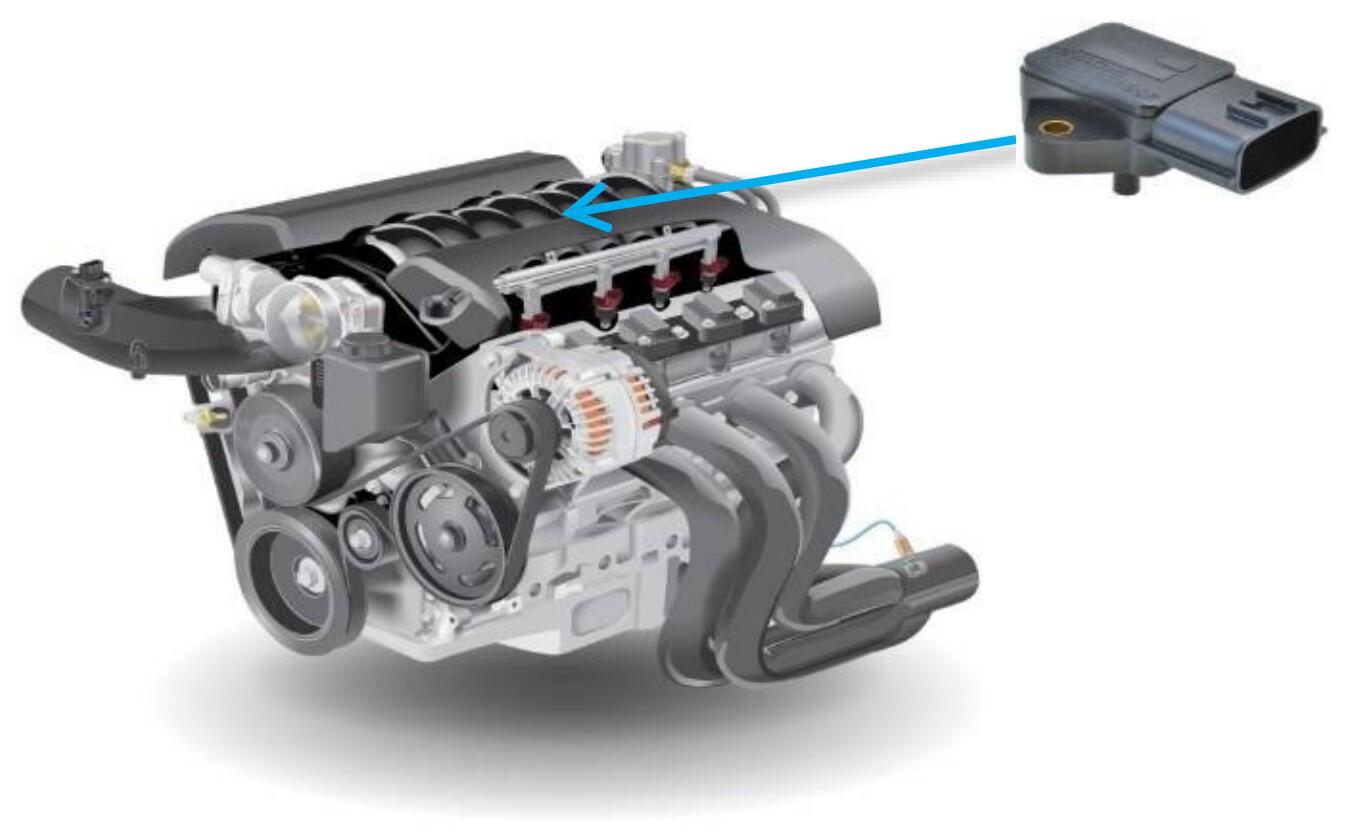
What is a Manifold Absolute Pressure Sensor?
The manifold absolute pressure sensor (MAP sensor), arranged at the downstream side of the
throttle valve, is a device measuring the pressure at the intake manifold. Using the pressure data
from the MAP sensor, the engine control unit (ECU) calculates the engine load to control the amount
of fuel injection and ignition timing.
If the engine is running under high load, the intake vacuum decreases as the throttle is kept open.
When the intake vacuum decreases and the engine sucks in large quantities of air, more fuel is
required to maintain the air/fuel ratio. Therefore, when the ECU detects a high engine load based on
the pressure data from the MAP sensor, an air/fuel mixture richer than normal is supplied to the
engine to maintain the air/fuel ratio. At the same time, the ECU delays the ignition timing to prevent
knocking, which leads to damage to the engine and a degraded performance.
Typical Symptoms in Case of Failure
Symptoms in case of failure
- If the MAP sensor fails and outputs high-pressure values, the fuel consumption would increase, leading to a decrease in fuel efficiency.
- If the MAP sensor fails and outputs low-pressure values, the fuel supply would be lower than normal, leading to irregular engine operations and insufficient power.
Typical causes of failures
- If the intake air is fouled, contaminated, or leaking, the MAP sensor would be physically damaged, making it impossible for the sensor to function correctly.
- Leakage in the vacuum chamber would make it impossible for the MAP sensor to measure the pressure correctly.
- If there are extreme temperature fluctuations or vibrations in the engine room environment, the internal circuits of the MAP sensor may fail.