News & Events

News & Events
What is a Shock Absorber?
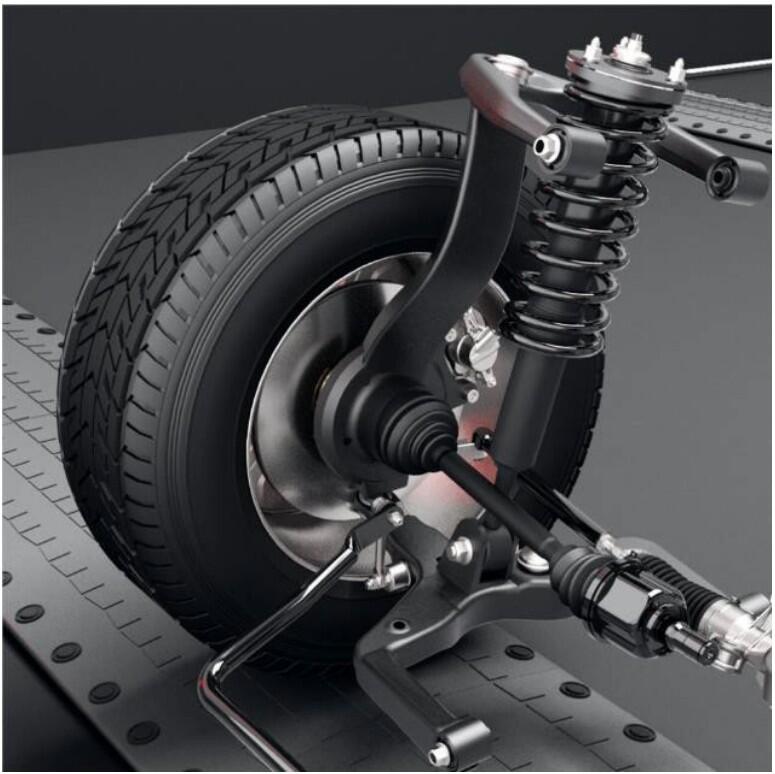
A shock absorber is one of the components that constitute the suspension system connecting the tire
wheel and the vehicle body. When a vehicle travels over a bump, the spring compresses and
absorbs the impact from the tire wheel, but because the compressed spring would attempt to return
to its original shape, the spring would repeat the extension and compression motions. The up and
down movements of the vehicle body would therefore not quickly cease. This state in which the
vehicle body continues bouncing up and down would not only make the passengers uncomfortable,
it can also make the road holding performance of the tire unstable, leading to adverse effects on the
operability and safety of the vehicle.
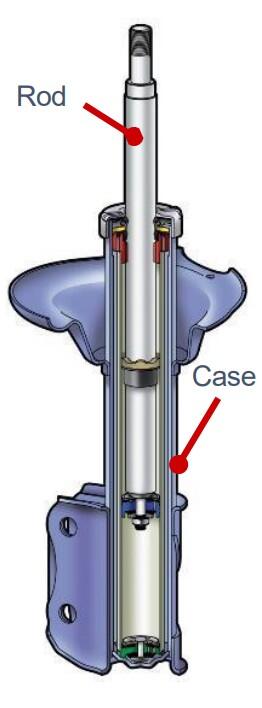
The shock absorbers suppress this spring vibration. A shock absorber consists of an oil- and
gas-sealed cylindrical case and a rod projecting out from the case. A shock absorber is connected to
each wheel, with one end connected to the tire wheel and the other end connected to the vehicle
body. When the rod moves into and out of the case according to the extension and compression of
the spring, the sealed oil and case components create a resistance force according to the velocity of
the rod, thereby damping (mitigating) the movement of the spring. Owing to the actuation of this
shock absorber, undesired vehicle body movements would be suppressed, and the movement of the
vehicle body would be stabilized, for example, when the vehicle travels over a bump. The shock
absorber also suppresses the feeling of rolling, which can cause anxiety in drivers. When the
performance of the shock absorber has degraded after prolonged use, drivers would frequently
become uncomfortable owing to such rolling impression. In this case, a level of ride comfort and
vehicle operability similar to those of a new car can be obtained by replacing the shock absorbers
with new ones. The shock absorbers are important components that provide vehicle safety and ride
comfort.
Typical Symptoms in Case of Failure
Symptoms in case of failure
- The impact when traveling on uneven road surfaces has increased
- Cornering has become unstable
- The driving posture and point of sight have become unstable
- It has become tiring to drive for long periods of time
- The steering wheel undesirably turns toward the left or right when the road surface becomes significantly wavy
- The tire has become unevenly worn
- Noise can be heard from the suspension system
- Oil is oozing out from the shock absorber